10 Things I Learned From CTO Craft Con 2026
My notes from an excellent CTO Craft Con 2026.
CTO Craft Con has been running for 9 years, but this year was my first chance to attend — and I'm pleased to say it didn't disappoint. As you'd expect given today's technical landscape, there was a lot of focus on AI and how it's been reshaping teams, particularly since December 2025.
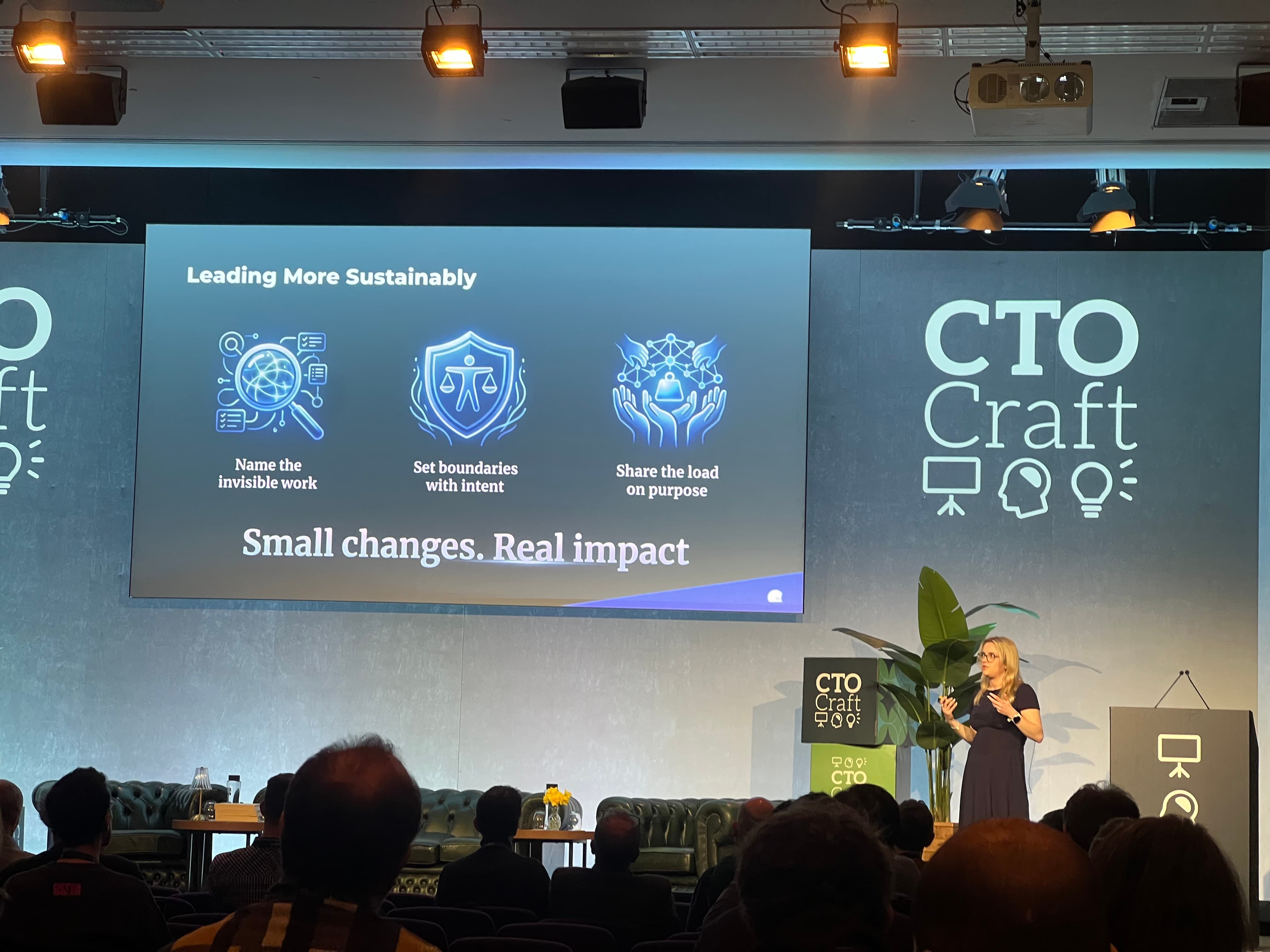
Small changes. Real impact.
Highlights / Thoughts
AI is Everywhere
AI is everywhere, and unsurprisingly it dominated the conversation in and out of the auditorium. I was keen to get a real sense of where people are in this journey.
I think everyone agreed it was disrupting common practice. There was no shortage of enthusiasm about what AI should be able to do - and while specific agentic AI success stories are still emerging, the direction of travel is clear. The industry is still in discovery mode. But the overall message was simple - pay attention, or risk getting left behind.
What Makes a Good Hire?
With the push for AI, what makes a good hire has changed. Several talks touched on the need for developers to also be good product people - and this came up repeatedly in conversations between sessions too. AI is merging the roles of product, engineering, design and UX together.
Over the last few months, my hiring focus has shifted towards people who can not only code well but also bring a product mindset and entrepreneurial outlook. For those who can do two of the three reasonably well, this is a genuine land of opportunity.
Empathy was a running theme
Several speakers raised empathy as the key differential between humans and AI. In particular, they commented that they felt empathy would be something that AI would never be able to replicate as it requires human effort.
The time you invest in your teams is part of the reason why empathy feels genuine; and even if AI could simulate it, it wouldn't carry the same weight.
As roles evolve in this new era, showing up with empathy for your team through that change matters more than ever.
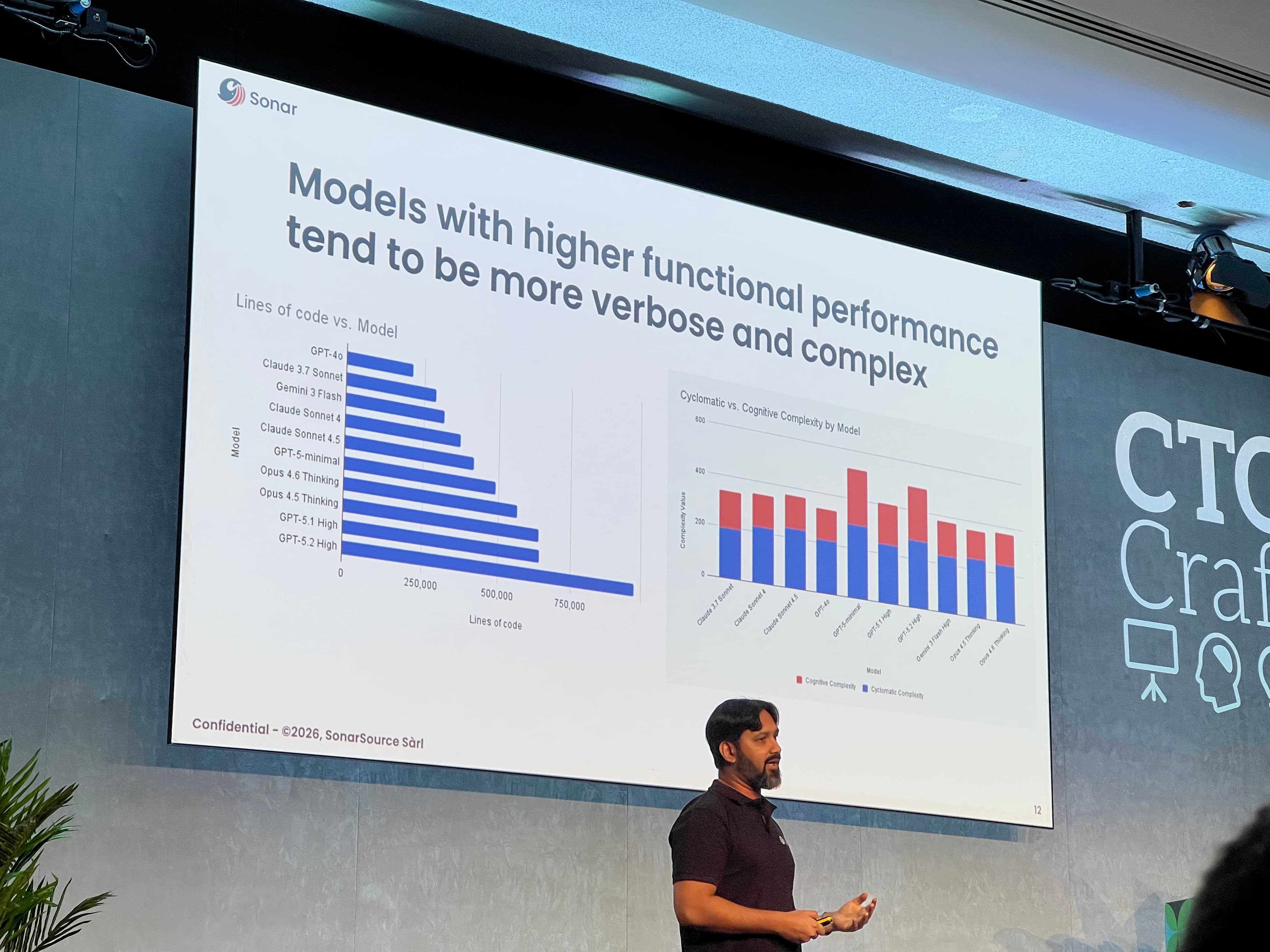
When a model performs better but at the cost of being more verbose
AI as a Thinking Partner
We've become accustomed to AI completing tasks for us in product engineering but James Stanier showed us how he was using it to reduce leadership isolation, manage his ideas and notes via a scratchpad of ideas and automate the mundane, like gathering metrics.
To borrow wisdom, James shares a list of transcribed podcasts, interviews and blog posts from people he admires, has AI summarises them and then includes those insights in his context files.
I'll certainly be playing around further with the idea of an AI Executive Assistant with all these different agent roles to help me work.
Moving the Bottleneck
Will Lytle spoke about how AI has made writing code cheap, but it has just moved the bottleneck further down the Software Development Life Cycle. He referred to a quote from State of DevOps 2025:
AI doesn't create organisational excellence - it amplifies what already exists. The value of AI will be unlocked by re-imagining the system of work it enables.
He spoke about the RACER framework which I'll be experimenting with over the next few weeks:
- Rollout: deploy and use the tools
- Approach: align the right tools with the right use cases
- Constraints: systematically eliminate barriers
- Engineering Impact: measure impact on productivity
- Results: achieve business outcomes
If you're navigating AI bottlenecks in your engineering org, his slides are sure to help
From SaaS to Agentic Platforms
Jaime de Mora made a compelling case for how SaaS is being disrupted by agentic AI.
He argued that interoperability needs to be the foundation of agentic systems — built on MCP protocols and CLIs — and showed how agentic products are increasingly being measured, and priced, by outcomes rather than usage. Intercom's Fin is a great example where they charge per successful ticket resolution, not per seat.
The market is shifting from traditional SaaS metrics like DAU, MAU, time in app and feature usage to outcome-based measures: tasks completed, time to resolution, cost per task, and ROI achieved.
Owning the Stack
Moving away from AI, Sathya Nandakumar delivered one of the most compelling talks of the conference - covering Holland & Barrett's complex journey from legacy systems to in-house platforms.
She spoke candidly about staying committed to the goal through significant challenges, and shared hard-won lessons on the importance of communicating complex migration work to stakeholders.
Leading From the Edge
Similarly, Dr. Ilknur Colak drew compelling parallels between climbing the Seven Summits and technical leadership.
There were some great tips for leaders in here such as building resilience before the storm, taking ownership with others hesitate, using bold communication to build trust and staying calm in uncertainty.
And beyond the leadership lessons, her personal story of conquering some of the world's most demanding terrain was genuinely inspiring.
Glue Work
Somehow I hadn't come across the term "glue work" before, but I quickly recognised it as something that I had come across many times over the years within my own leadership skills and team.
In her talk, Melinda Seckington presented how to share glue work through the team and through the community - and how sharing that glue work builds leadership skills and shapes engineering culture.
Melinda propsed six levels to share the glue work between teams:
Perpertual Exposure
- Recognise and Celebrate
- Build Shared Knowledge
- Connect People
Deliberate Practice
- Learn By Doing
- Learn By Teaching
- Learn By Leading
The Human Load Balancer
Another talk that hit home was Rebecca Anderton's session about the human load balancer and recognising when shielding your team actually becomes a burnout risk to you as a leader.
She spoke about the invisible work that leaders often do to protect their team - which works in the short term but creates problems further down the line.
So instead Rebecca advised on how to step away from being always-on and build sustainable leadership practices such as sharing context, building boundaries with intent and sharing the load on purpose that in the long term protect both the team and leader.
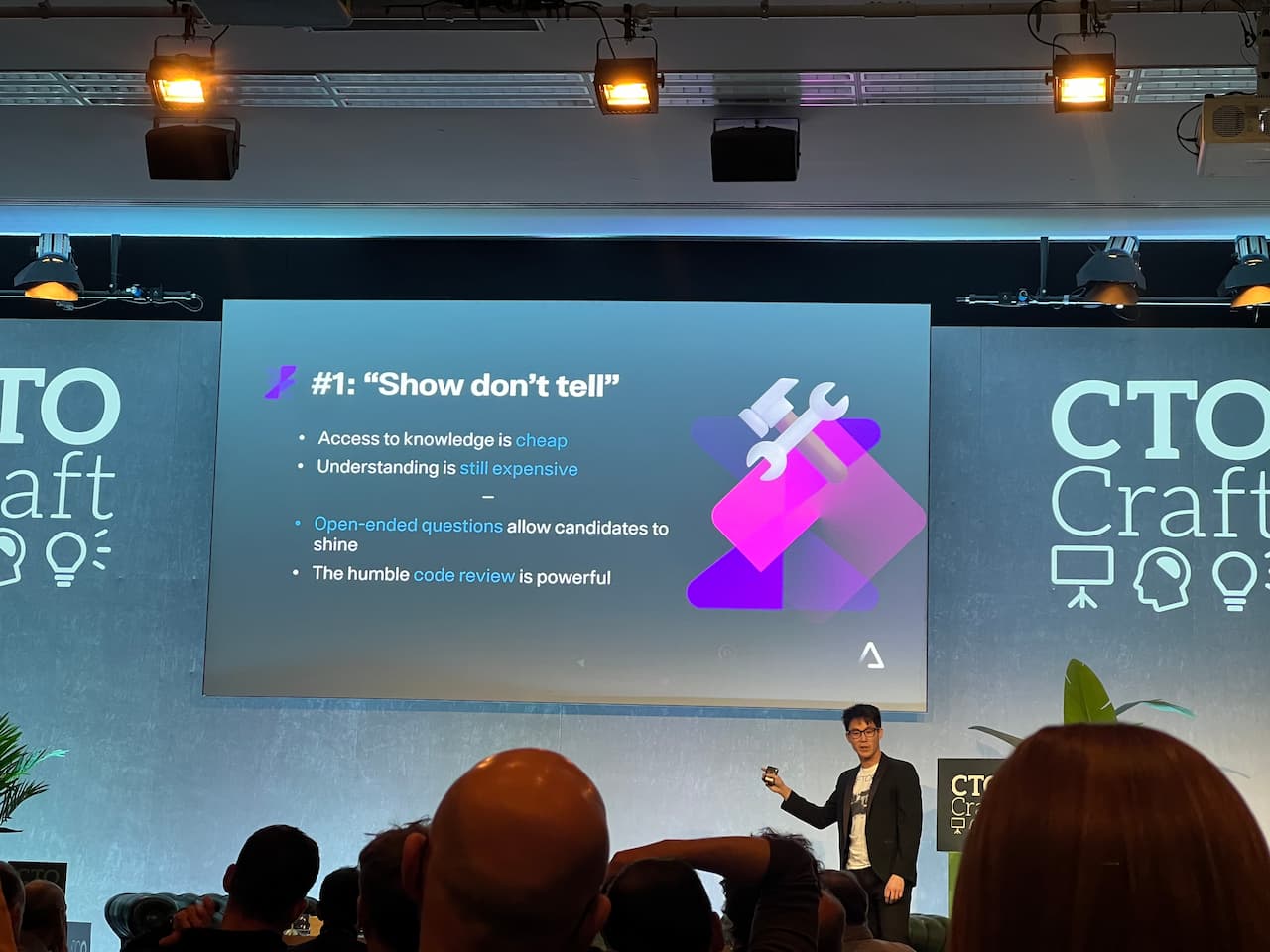
There was also lots of advice on hiring and people management
Conclusion
There were so many great talks and insights that I haven't mentioned here, and I genuinely found something of value in almost every one of the talks.
Looking forward to the next CTO Craft Con — maybe by then AI will have advanced enough to take the stage itself!

By Andi Smith
Related Blog Posts
Measure Shipped Work, Not Tokens
If everyone on your team uses AI every day, what does your AI adoption metric actually tell you?
AI to Resolve Incidents
We put an AI bot between our alerting and our on-call engineer. It reads the logs, the traffic and the recent deploys, then comments on the incident before anyone has even opened Slack.
Undefined Roles
With the acceleration of AI, the traditional boundaries between product, engineering and UX are collapsing.
AI Is Only As Good As Your Understanding
If AI is so good at solving problems, why do you still need employees?